
UGV technology
UGV Fleet Management and Multi-Robot Coordination
Define the mission, terrain, payload, control mode, communications, safety controls and recovery plan before selecting or configuring the unmanned platform.
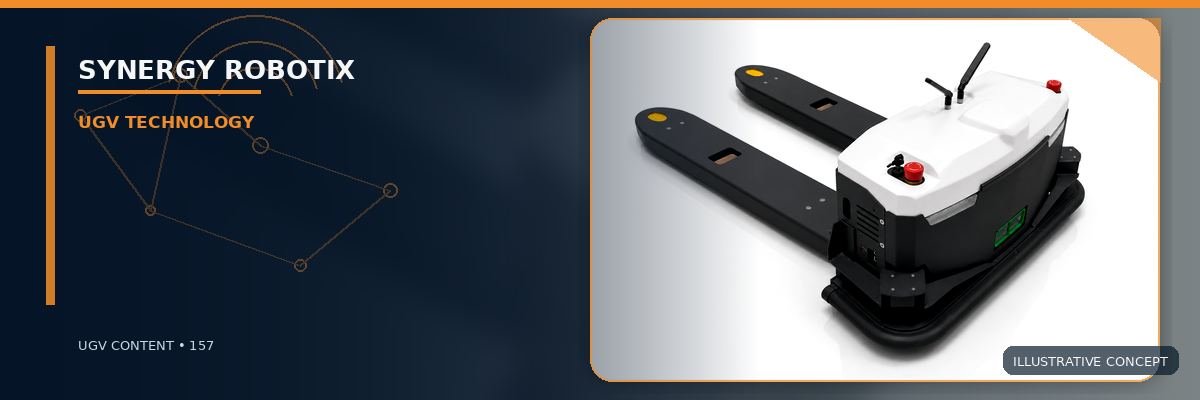
Start UGV Fleet Management and Multi-Robot Coordination with a bounded mission
UGV Fleet Management and Multi-Robot Coordination is best assessed as part of the wider material-flow or mission system. Navigation, handling, communications, energy, maintenance and operator intervention need to support the same operating concept.
For UGV Fleet Management and Multi-Robot Coordination, relevant stakeholders normally include mission owners, operations, controls, communications, safety, maintenance and the team responsible for recovery.
Mission outcome
Specify the useful result expected from UGV Fleet Management and Multi-Robot Coordination, including route or area, payload output, completion evidence, supervision and abort conditions.
Operating domain
Describe surfaces, gradients, obstacles, gaps, weather, lighting, people, vehicles, restricted zones and expected environmental change.
Control and recovery
Choose teleoperation, supervised autonomy, autonomous execution or a defined combination, then state lost-link behaviour and the practical recovery route.
Engineering inputs that shape UGV Fleet Management and Multi-Robot Coordination
Translate the UGV Fleet Management and Multi-Robot Coordination into a mission statement that includes the useful outcome, route or area, duration, payload, supervision and abort conditions. A platform can be suitable in one operating domain and unsuitable in another even when the headline mobility architecture appears similar.
Record terrain, gradient, obstacle and gap envelope, weather, lighting, dust or water exposure, communication coverage, access restrictions and recovery routes. Evaluate the installed payload with the vehicle because mass, centre of gravity, power demand, field of view and data quality can alter mission performance.
Evidence to prepare before equipment selection
- Mission sequence and completion evidence
- Defined terrain and environmental envelope
- Payload mounting, power, data and calibration needs
- Teleoperation, supervision and autonomous authority
- Lost-link, low-energy and localisation fallback
- Practical extraction and return-to-service method
How a UGV Fleet Management and Multi-Robot Coordination mission progresses
For UGV Fleet Management and Multi-Robot Coordination, the operating sequence should make task ownership, physical handling, system states and recovery visible from release through completion.
-
Authorise the mission
An operator or mission system confirms the route or area, payload task, control mode, operating limits and abort criteria.
-
Check vehicle and payload
Energy, communications, sensing, payload mounting, data recording and recovery equipment are checked before departure.
-
Execute within the domain
The platform travels using the approved teleoperated, supervised or autonomous functions while monitoring terrain, obstacles, localisation and mission conditions.
-
Handle degraded conditions
Lost link, low energy, blocked terrain, sensing degradation or operator intervention triggers the defined fallback rather than an improvised response.
-
Complete and recover data
The mission ends with a safe vehicle state, payload or data handoff, event review, maintenance checks and confirmation that the system is ready for further use.
Connect UGV Fleet Management and Multi-Robot Coordination to equipment and information flow
Interfaces around UGV Fleet Management and Multi-Robot Coordination should be stateful, testable and owned. A clear handshake is easier to operate and support than a collection of one-way commands.
Mission control
Mission definitions for UGV Fleet Management and Multi-Robot Coordination should include route or area, control mode, payload task, limits, abort criteria and completion evidence.
Communications
Specify coverage, bandwidth, latency, interference, authentication, logging and lost-link behaviour for each part of the operating domain.
Payload data
Define power, time synchronisation, storage, data quality, field of view, calibration, transmission and secure retrieval.
Operator interface
Present vehicle mode, authority, mission state, energy, alarms and recovery instructions clearly enough for timely intervention.
Design safe operation and practical recovery for UGV Fleet Management and Multi-Robot Coordination
Safety for UGV Fleet Management and Multi-Robot Coordination depends on the mission and operating domain. Consider people and vehicles, terrain, payload movement, communications, localisation, environmental exposure, restricted areas, remote operator workload and the consequences of stopping in an inaccessible place.
Fallback behaviour should be deliberate and observable. A controlled stop may be appropriate in one mission, while retreat, return or limited continued operation may be safer in another. The selected response, operator notification and extraction method need representative testing before operational use.
Subjects to include in the installed review
- Defined control authority and mode indication
- Obstacle and terrain response
- Lost-link and degraded-localisation behaviour
- Payload stability and sensor visibility
- Restricted-area access and geofencing
- Safe extraction and return to service
Evidence to review before approving UGV Fleet Management and Multi-Robot Coordination
For UGV Fleet Management and Multi-Robot Coordination, convert assumptions into records that can be reviewed, tested and maintained through the project lifecycle.
| Decision area | Evidence to prepare | How to validate it |
|---|---|---|
| Mission | Task sequence, useful output, duration, supervision and abort criteria | Demonstrate the complete mission under representative conditions |
| Operating domain | Terrain, gradients, obstacles, weather, lighting and access | Test the installed payload across the approved domain |
| Control and communications | Authority, link performance, cybersecurity and lost-link response | Verify mode indication, handover and degraded operation |
| Payload | Mass, mounting, power, data, field of view and calibration | Confirm stability, sensing and data quality in motion |
| Recovery | Low energy, immobilisation, localisation loss and extraction | Rehearse a safe practical return-to-service method |
Measure the operating outcome for UGV Fleet Management and Multi-Robot Coordination
For UGV Fleet Management and Multi-Robot Coordination, useful performance measures connect mobile activity with the workflow result and the effort needed to sustain it.
Flow reliability
Track whether UGV Fleet Management and Multi-Robot Coordination completes the intended missions with stable handoffs, visible queues and controlled exception handling.
Operational effort
For UGV Fleet Management and Multi-Robot Coordination, measure walking, driving, waiting, manual intervention, supervision and recovery work before and after implementation.
System availability
Review completed tasks, downtime causes, charger or resource queues, maintenance and return-to-service time for UGV Fleet Management and Multi-Robot Coordination.
A staged route from concept to acceptance for UGV Fleet Management and Multi-Robot Coordination
A controlled UGV Fleet Management and Multi-Robot Coordination project should move through decision gates rather than treating installation as one event. Each stage should confirm that assumptions about the task, load or payload, site, interfaces, safety responsibilities and operating model still match the evidence.
Acceptance should include the complete mission, representative terrain and environmental conditions, payload data, control-mode changes, communications degradation, low energy, immobilisation and extraction. Training should cover operators, mission owners, maintenance personnel and anyone authorised to recover or transport the platform.
-
Discover
Map the workflow or mission, stakeholders, current constraints and measurable outcome.
-
Survey
Capture representative loads or payloads, route or terrain, transfer points, services, traffic and hazards.
-
Engineer
Select the architecture, define interfaces, controls, safety measures, energy and support responsibilities.
-
Implement
Configure, integrate and test components with controlled change and traceable issue resolution.
-
Accept
Run representative normal, peak, fault and recovery tests before training and operational handover.
Related robots, applications and guides
Use these Synergy Robotix resources to compare adjacent product, application, integration and selection decisions connected with UGV Fleet Management and Multi-Robot Coordination.
FAQ
Questions buyers ask
Straight answers about UGV Fleet Management and Multi-Robot Coordination.
Still have a question? Our engineers answer every enquiry personally.
What must be defined before selecting UGV Fleet Management and Multi-Robot Coordination?
Start with the mission sequence, operating domain, payload, control mode, communications, energy, hazards, recovery and acceptance evidence.
How do teleoperation and autonomy differ?
Teleoperation places motion control with a remote operator. Supervised or autonomous functions allow the vehicle to execute defined parts of the mission. Authority, handover and degraded behaviour must be explicit.
Which mobility type is best?
Wheels, tracks and specialised mechanisms trade traction, energy, speed, turning loads, surface interaction, maintenance and recovery. Test the installed payload on representative terrain.
How should communication loss be handled?
The correct response depends on mission risk and location. It may involve a controlled stop, retreat, return or limited operation. The selected behaviour and extraction route require validation.
Which specifications require approved evidence?
Payload, range, runtime, gradient, obstacle capability, environmental protection and communication distance depend on the final configuration and operating domain.
Let us engineer the right fit
Plan UGV Fleet Management and Multi-Robot Coordination around the real operation
Share the load or payload, route or operating domain, task demand, transfer points, interfaces and known constraints for UGV Fleet Management and Multi-Robot Coordination. Send them to us and a Synergy Robotix engineer will come back with the questions that matter and a practical next step.