
AGV for E-commerce Logistics
An AGV works by receiving a transport task from a warehouse system or operator interface. It then moves to the pickup location using navigation technologies such as LiDAR, laser, SLAM, QR code, magnetic, or vision guidance. After collecting or carrying the material, the AGV travels safely to the assigned drop-off point using sensors, scanners, obstacle detection, and safety controls.
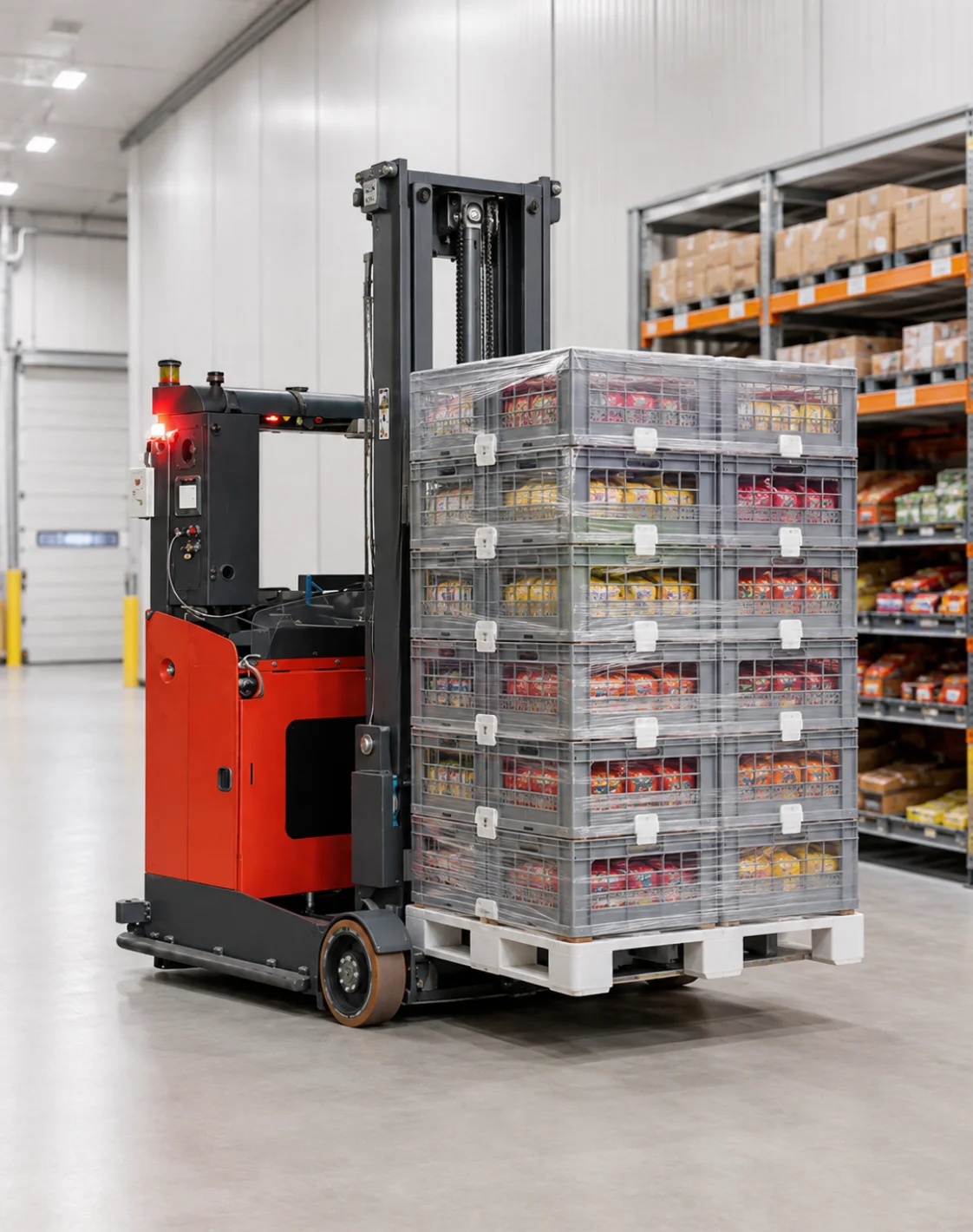
E-commerce and logistics operations need fast, accurate, and continuous movement of goods An Automated Guided Vehicle (AGV) is a driverless material handling vehicle used to move goods automatically inside warehouses, fulfillment centers, distribution hubs, and logistics facilities. In e-commerce operations, AGVs transport cartons, totes, bins, parcels, pallets, packaging materials, and completed orders between receiving, storage, picking, packing, sorting, and dispatch areas.
Synergy Robotix provides AGV for E-commerce Logistics to help warehouses automate internal material movement, reduce manual handling, improve order flow, increase workplace safety, and support faster fulfillment operations.
Why Choose an Automated Guided Vehicle for Logistics?
An automated guided vehicle for logistics moves goods inside a warehouse or fulfillment center without manual driving.
Supports high order volumes, long travel distances, repeated movement routes, and time-sensitive delivery schedules.
Helps workers focus on picking, packing, quality checking, inventory control, and dispatch planning.
Follows planned routes for smooth and controlled warehouse movement.
Helps create a faster, more predictable warehouse operation.
Moves materials between defined pickup and drop-off points.
Improves internal flow and reduces manual dependency.
Reduces repetitive manual transport tasks.
Why Choose an Automated Guided Vehicle for Logistics?
An automated guided vehicle for logistics moves goods inside a warehouse or fulfillment center without manual driving.
Supports high order volumes, long travel distances, repeated movement routes, and time-sensitive delivery schedules.
Helps workers focus on picking, packing, quality checking, inventory control, and dispatch planning.
Follows planned routes for smooth and controlled warehouse movement.
Helps create a faster, more predictable warehouse operation.
Moves materials between defined pickup and drop-off points.
Improves internal flow and reduces manual dependency.
Reduces repetitive manual transport tasks.
Features of Our E-commerce AGV Solutions

Safety scanners, obstacle detection, emergency stop systems, warning indicators, and collision avoidance.
Smart fleet control for task assignment, route planning, vehicle coordination, and traffic management.
Configurable vehicle design based on load size, route distance, warehouse layout, and operating process.
Integration with WMS, WCS, ERP, conveyors, sorters, lifts, and warehouse control systems.
Workflow support for inbound, storage, picking, packing, sorting, shipping, and returns.
Scalable fleet options for growing order volumes and larger warehouse operations.
Automated movement of cartons, totes, bins, pallets, parcels, and order containers.
Real-time transport visibility to track goods movement between warehouse zones.
Automatic charging support for long operating hours and reduced downtime.
Intelligent navigation using LiDAR, laser, SLAM, QR code, magnetic, or vision guidance.
Benefits of AGV for Order Fulfillment and Dispatch Operations
Faster Order Movement
AGVs move goods quickly between storage, picking, packing, sorting, and dispatch areas, helping improve e-commerce order fulfillment speed.
Better Labor Utilization
By automating repetitive transport tasks, AGVs allow warehouse staff to focus on scanning, checking, packing, and quality control.
Safer Warehouse Operations
AGVs use scanners, obstacle detection, speed control, and emergency stop systems for safer movement around people and equipment.
Scalable Warehouse Automation
AGV automation can start with one vehicle and expand as order volume, storage capacity, and logistics requirements grow.
Reduced Product Damage
Controlled AGV movement reduces manual handling errors, product impact, and damage to cartons, totes, parcels, and pallets.
Better Peak Season Support
During sales campaigns and demand spikes, AGVs help maintain smooth warehouse movement and faster dispatch.
Improved Inventory Visibility
AGV system integration helps track material movement across warehouse zones and improves stock visibility.
Applications of AGVs in E-commerce Warehouses
Return item movement for inspection and restocking
Support for conveyor and sorting system workflows
Pallet movement for bulk storage and dispatch
Tote and bin movement for picking operations
Packaging material delivery to workstations
Inventory transfer between warehouse zones
Completed order movement to sorting areas
Carton movement to packing stations
Receiving dock to storage movement
Parcel transfer to shipping zones
Order staging before dispatch
Why Choose Synergy Robotix AGV Solutions for E-commerce Logistics?
Studies your material movement, order flow, route distance, load type, pickup points, and drop-off points before planning the AGV system.
Helps reduce manual handling, improve warehouse flow, increase movement visibility, and build a reliable internal transport system.
Designs AGV workflows for e-commerce logistics based on your facility layout, operational bottlenecks, and daily movement needs.
Provides AGV solutions for warehouse automation designed for real logistics and material-handling challenges.
Serves e-commerce warehouses, fulfillment centers, distribution centers, and large logistics operations.
Supports parcel movement, sorting, dispatch, replenishment, returns, and internal warehouse transport.
Allows you to start with one automated movement workflow and expand as order volume grows.
Plans every AGV deployment with scalability, safety, and system integration in mind.
FAQ AGV for E-commerce Fulfillment
1. How do AGVs improve warehouse operations?
AGVs improve warehouse operations by reducing manual transport, supporting faster goods movement, reducing bottlenecks, and helping teams manage high order volumes more efficiently.
2. Can AGVs help with parcel sorting?
Yes. AGVs can move parcels or totes to the correct sorting zone, destination area, carrier lane, or outbound route.
3. Can AGVs support reverse logistics?
Yes. AGVs can move returned goods from receiving to inspection, sorting, repacking, restocking, disposal, or vendor-return areas.
4. What happens if Automated Guided Vehicle are not used in logistics operations?
Without AGVs, logistics operations may face delayed order processing, sorting errors, dispatch delays, slow returns handling, higher labor dependency, peak-demand pressure, and shipment errors.
5. Can AGVs connect with warehouse software?
Yes. AGVs can connect with warehouse management, warehouse execution, warehouse control, ERP, barcode scanning, sorting, packing, dispatch, and fleet-management systems depending on the facility setup.
6. Is AGV automation suitable for small e-commerce warehouses?
Yes, when the warehouse has repeated movement routes, regular parcel movement, high manual travel time, or frequent dispatch delays. A focused workflow can be automated first and expanded later.
7. How can I choose the right AGV system?
The right AGV system depends on load type, route distance, floor condition, warehouse layout, order volume, software requirements, and safety planning. A feasibility study helps identify the best solution for your operation.
8. What is the difference between AGVs and conveyors?
Conveyors are useful for fixed, high-volume movement routes. AGVs are better when the warehouse needs flexible movement between multiple pickup and drop-off points.