
Forklift stacker engineering
3-Tonne Autonomous Forklift Stacker with 6-Metre Lift
Evaluate the target 3-tonne class and 6-metre lift requirement against the real load centre, pallet, mast, attachment, rack, aisle and operating conditions.
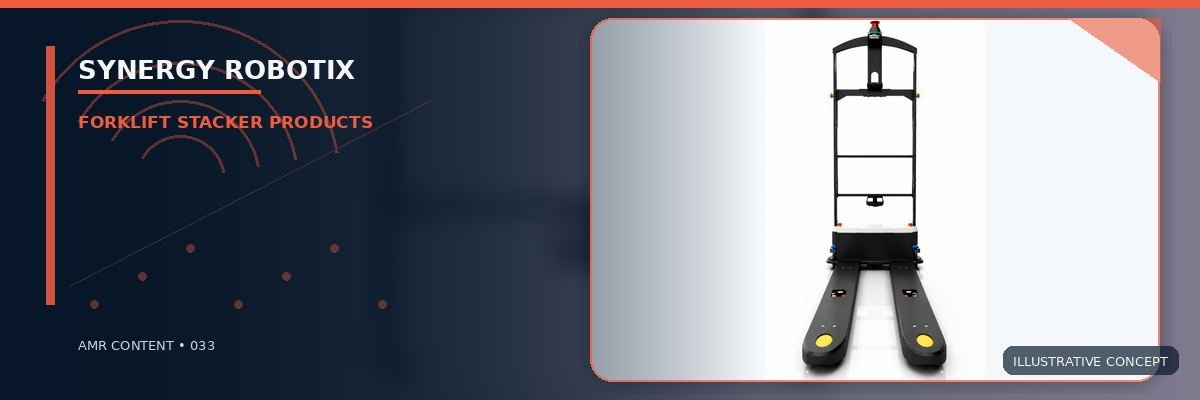
Define the working envelope for 3-Tonne Autonomous Forklift Stacker with 6-Metre Lift
3-Tonne Autonomous Forklift Stacker with 6-Metre Lift addresses heavy high-bay pallet handling where capacity and height interact strongly. The title identifies the target capacity and lift class, while the usable operating envelope still depends on the approved mast, attachment, load centre, carrier, floor, rack and route. The engineering review should focus on approved residual-capacity evidence, load-centre control, structural floor review, restricted operation and engineered recovery.
Application profile
Evaluate 3-Tonne Autonomous Forklift Stacker with 6-Metre Lift for heavy high-bay pallet handling where capacity and height interact strongly. Candidate workflows should present the load consistently and keep pickup, travel and placement conditions inside the approved operating envelope.
Representative loads
Use dense, stable pallets or engineered carriers requiring upper-level placement. Record mass, dimensions, centre of gravity, stability, pallet or carrier condition and every orientation used in production.
Primary design emphasis
Give particular attention to approved residual-capacity evidence, load-centre control, structural floor review, restricted operation and engineered recovery. The project should also account for this limitation: a three-tonne target at six metres cannot be treated as a combined catalogue promise; the exact mast, attachment, load and site determine the allowable envelope.
Engineering inputs that shape 3-Tonne Autonomous Forklift Stacker with 6-Metre Lift
The 3-tonne class in 3-Tonne Autonomous Forklift Stacker with 6-Metre Lift should be checked against dense, stable pallets or engineered carriers requiring upper-level placement. Nominal capacity does not replace an approved load chart or residual-capacity assessment for the actual mast, attachment, load centre and working height. For this configuration, a three-tonne target at six metres cannot be treated as a combined catalogue promise; the exact mast, attachment, load and site determine the allowable envelope.
The 6-metre target requires a route and rack survey that covers floor flatness, aisle width, turning sweep, beam levels, pallet overhang, mast clearance, visibility and recovery access. The validation emphasis should be approved heavy loads at the highest required location, least-forgiving route geometry, controlled fault cases and elevated-load recovery equipment.
Evidence to prepare before equipment selection
- Approved data for the 3-tonne and 6-metre target configuration
- Representative evidence for dense, stable pallets or engineered carriers requiring upper-level placement
- Design review centred on approved residual-capacity evidence, load-centre control, structural floor review, restricted operation and engineered recovery
- Measured pallet, rack, aisle, floor and overhead geometry
- Location confirmation, restricted access and exception recovery
- Acceptance tests including approved heavy loads at the highest required location, least-forgiving route geometry, controlled fault cases and elevated-load recovery equipment
How 3-Tonne Autonomous Forklift Stacker with 6-Metre Lift completes a pallet move
For 3-Tonne Autonomous Forklift Stacker with 6-Metre Lift, the operating sequence should make task ownership, physical handling, system states and recovery visible from release through completion.
-
Confirm the target mission
Release only tasks that match the approved 3-tonne-class load envelope, source, destination and required level.
-
Inspect the carrier presentation
Check the pallet or engineered carrier used for dense, stable pallets or engineered carriers requiring upper-level placement, including fork entry, alignment, stability and obstruction.
-
Acquire and establish travel posture
Lift only enough to confirm support and reach the defined travel state, with controls aligned to approved residual-capacity evidence, load-centre control, structural floor review, restricted operation and engineered recovery.
-
Navigate the controlled route
Use configured traffic rules, restricted zones and waiting positions that reflect the measured turning envelope and floor conditions.
-
Place and verify at the target level
Complete the transfer within the approved 6-metre profile, then confirm load release, location state and recovery readiness.
Connect 3-Tonne Autonomous Forklift Stacker with 6-Metre Lift to equipment and information flow
Interfaces around 3-Tonne Autonomous Forklift Stacker with 6-Metre Lift should be stateful, testable and owned. A clear handshake is easier to operate and support than a collection of one-way commands.
Task eligibility
Prevent assignment when the load, destination or target level sits outside the approved envelope for 3-Tonne Autonomous Forklift Stacker with 6-Metre Lift.
Pallet and location identity
Confirm the carrier, source, destination and rack position associated with dense, stable pallets or engineered carriers requiring upper-level placement before fork entry.
High-level transfer states
Coordinate protected aisle access, mast movement, placement confirmation, obstruction and timeouts for the 6-metre profile.
Recovery visibility
Show load state, fork or mast condition, location status and the approved response when approved heavy loads at the highest required location, least-forgiving route geometry, controlled fault cases and elevated-load recovery equipment exposes an exception.
Design safe operation and practical recovery for 3-Tonne Autonomous Forklift Stacker with 6-Metre Lift
Safety planning for 3-Tonne Autonomous Forklift Stacker with 6-Metre Lift should reflect heavy high-bay pallet handling where capacity and height interact strongly. The hazard review must include load acquisition, travel posture, steering and stopping, mast movement, placement, people or vehicle access, maintenance and recovery.
For this combination, the strongest attention belongs on approved residual-capacity evidence, load-centre control, structural floor review, restricted operation and engineered recovery. The installed controls and procedures should address the following constraint: a three-tonne target at six metres cannot be treated as a combined catalogue promise; the exact mast, attachment, load and site determine the allowable envelope. Validate the result through approved heavy loads at the highest required location, least-forgiving route geometry, controlled fault cases and elevated-load recovery equipment.
Subjects to include in the installed review
- Approved operating envelope for 3 tonnes and 6 metres
- Load-centre and carrier-condition controls
- Travel posture, speed and route restrictions
- Protected pickup and putaway zones
- Mast, fork and location-state visibility
- Securing and recovering a faulted load
Evidence to review before approving 3-Tonne Autonomous Forklift Stacker with 6-Metre Lift
For 3-Tonne Autonomous Forklift Stacker with 6-Metre Lift, convert assumptions into records that can be reviewed, tested and maintained through the project lifecycle.
| Decision area | Evidence to prepare | How to validate it |
|---|---|---|
| Configuration evidence | Exact mast, attachment, load centre and approved residual-capacity data for 6 metres | Engineering approval before proposal or publication |
| Load family | Dense, stable pallets or engineered carriers requiring upper-level placement | Test representative and worst credible presentation |
| Application priority | Approved residual-capacity evidence, load-centre control, structural floor review, restricted operation and engineered recovery | Review the least forgiving route and location |
| Known constraint | A three-tonne target at six metres cannot be treated as a combined catalogue promise; the exact mast, attachment, load and site determine the allowable envelope | Challenge the design with deliberate off-nominal cases |
| Acceptance emphasis | Approved heavy loads at the highest required location, least-forgiving route geometry, controlled fault cases and elevated-load recovery equipment | Retain traceable results and recovery records |
Measure the operating outcome for 3-Tonne Autonomous Forklift Stacker with 6-Metre Lift
For 3-Tonne Autonomous Forklift Stacker with 6-Metre Lift, useful performance measures connect mobile activity with the workflow result and the effort needed to sustain it.
Flow reliability
Track whether 3-Tonne Autonomous Forklift Stacker with 6-Metre Lift completes the intended missions with stable handoffs, visible queues and controlled exception handling.
Operational effort
For 3-Tonne Autonomous Forklift Stacker with 6-Metre Lift, measure walking, driving, waiting, manual intervention, supervision and recovery work before and after implementation.
System availability
Review completed tasks, downtime causes, charger or resource queues, maintenance and return-to-service time for 3-Tonne Autonomous Forklift Stacker with 6-Metre Lift.
A staged route from concept to acceptance for 3-Tonne Autonomous Forklift Stacker with 6-Metre Lift
A project for 3-Tonne Autonomous Forklift Stacker with 6-Metre Lift should keep the target class separate from approved performance. Discovery should confirm heavy high-bay pallet handling where capacity and height interact strongly; detailed engineering should then approve the exact load, mast, attachment, route, rack and operating controls.
Commissioning should concentrate on approved heavy loads at the highest required location, least-forgiving route geometry, controlled fault cases and elevated-load recovery equipment. Training and handover must include the normal workflow, load-rejection criteria, restricted operating states, elevated-load fault handling and the equipment and roles needed for safe recovery.
-
Define
Document heavy high-bay pallet handling where capacity and height interact strongly and the expected service level.
-
Measure
Capture dense, stable pallets or engineered carriers requiring upper-level placement, route, floor, aisle and rack geometry.
-
Approve
Obtain configuration-specific capacity, mast and attachment evidence for the 6-metre profile.
-
Prove
Run approved heavy loads at the highest required location, least-forgiving route geometry, controlled fault cases and elevated-load recovery equipment under controlled conditions.
-
Handover
Train operators and maintenance personnel, release procedures and retain the approved operating envelope.
Related robots, applications and guides
Use these Synergy Robotix resources to compare adjacent product, application, integration and selection decisions connected with 3-Tonne Autonomous Forklift Stacker with 6-Metre Lift.
FAQ
Questions buyers ask
Straight answers about 3-Tonne Autonomous Forklift Stacker with 6-Metre Lift.
Still have a question? Our engineers answer every enquiry personally.
Is 3-Tonne Autonomous Forklift Stacker with 6-Metre Lift automatically rated for the full named load at the full height?
No. The title defines a target class. Final residual capacity depends on the exact mast, attachment, load centre, carrier and conditions. For this configuration, remember that a three-tonne target at six metres cannot be treated as a combined catalogue promise; the exact mast, attachment, load and site determine the allowable envelope.
Which loads should be used during engineering?
Use dense, stable pallets or engineered carriers requiring upper-level placement. Include normal variation and the least favourable credible load centre, condition and presentation.
What part of the site deserves the closest survey?
Focus on approved residual-capacity evidence, load-centre control, structural floor review, restricted operation and engineered recovery, together with the least forgiving aisle, floor transition, rack position, overhead restriction and recovery access.
What should the acceptance plan emphasise?
Include approved heavy loads at the highest required location, least-forgiving route geometry, controlled fault cases and elevated-load recovery equipment. Also challenge failed handshakes, blocked access, emergency stops and controlled restart.
Which claims can be published before approval?
Do not publish residual capacity, lift performance, throughput or site suitability until the responsible engineers approve the exact configuration and evidence.
Let us engineer the right fit
Plan 3-Tonne Autonomous Forklift Stacker with 6-Metre Lift around the real operation
Share the load or payload, route or operating domain, task demand, transfer points, interfaces and known constraints for 3-Tonne Autonomous Forklift Stacker with 6-Metre Lift. Send them to us and a Synergy Robotix engineer will come back with the questions that matter and a practical next step.