
Commercial planning
AMR vs Manual Material-Handling Cost Comparison
Build the business case from measured labour, travel, demand, integration, support and risk assumptions instead of relying on a headline price or generic payback claim.
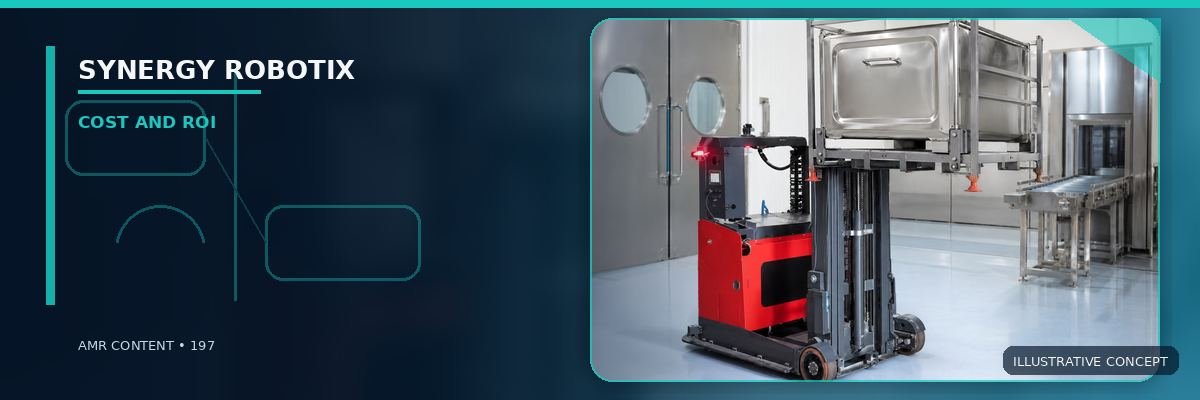
Build AMR vs Manual Material-Handling Cost Comparison from measured operations
AMR vs Manual Material-Handling Cost Comparison can support automating repeatable material movement within a defined industrial workflow in manufacturing and industrial facilities. A useful concept starts with measured workflow evidence and finishes with representative tests, trained ownership and a practical recovery method.
A sound decision on AMR vs Manual Material-Handling Cost Comparison brings operations, engineering, safety, IT or controls, maintenance, finance and procurement into the same evidence-based review.
Application scope
Define exactly what is included in the commercial estimate for AMR vs Manual Material-Handling Cost Comparison: vehicles, load interfaces, controls, integration, infrastructure, testing, training and support.
Site-dependent work
Identify floor repairs, markings, power, network, doors, lifts, guarding, transfer stations, charging areas and software changes that may sit outside the vehicle supply.
Commercial assumptions
Record currency, taxes, logistics, warranty, maintenance, spares, software terms, service response and change-control rules before comparing proposals.
Engineering inputs that shape AMR vs Manual Material-Handling Cost Comparison
Use AMR vs Manual Material-Handling Cost Comparison to build a transparent cost model with a defined boundary. Separate vehicle or robot supply, engineering, integration, infrastructure, software, testing, training, maintenance, energy, spares, support and future change. Record which elements are included, optional, customer-supplied or still uncertain.
Build benefits from the current process baseline and an agreed future operating model. Measure travel, handling, waiting, task demand, labour allocation, equipment use, damage, rework and service levels. Avoid counting the same saving twice, and distinguish cash savings from avoided hiring, capacity, consistency, safety improvement and strategic flexibility.
Evidence to prepare before equipment selection
- Current-state task and cost baseline
- Project scope, exclusions and customer responsibilities
- Lifecycle maintenance, software and support assumptions
- Adoption, availability and utilisation assumptions
- Sensitivity for demand, labour and implementation change
- Approval method for the final business case
Turn AMR vs Manual Material-Handling Cost Comparison into an auditable decision
For AMR vs Manual Material-Handling Cost Comparison, the operating sequence should make task ownership, physical handling, system states and recovery visible from release through completion.
-
Measure the current process
Record task demand, labour allocation, travel, waiting, equipment use, exceptions and service performance.
-
Define the future operating model
State which work becomes automated, which work remains manual, and how staff, systems and equipment interact.
-
Scope the complete project
Include mobile equipment, carriers, integration, infrastructure, testing, training, support and change management.
-
Model scenarios
Compare conservative, expected and demanding cases for availability, adoption, task volume, costs and benefits.
-
Approve and track
Agree the commercial baseline, decision gates and post-deployment measures so actual outcomes can be compared with the approved case.
Connect AMR vs Manual Material-Handling Cost Comparison to equipment and information flow
Interfaces around AMR vs Manual Material-Handling Cost Comparison should be stateful, testable and owned. A clear handshake is easier to operate and support than a collection of one-way commands.
Operations data
Use task and process records for AMR vs Manual Material-Handling Cost Comparison so demand, delay, variability and current resource use are visible.
Engineering scope
Connect the business case to route, load, handling interface, controls, infrastructure, safety and acceptance requirements.
Finance model
Separate capital, operating and lifecycle costs; document timing, taxes, depreciation or financing treatment according to the organisation's own policy.
Performance tracking
Define measures that can be compared before and after deployment, with ownership for data quality and corrective action.
Design safe operation and practical recovery for AMR vs Manual Material-Handling Cost Comparison
The business case for AMR vs Manual Material-Handling Cost Comparison should include the resources needed to implement and sustain the safety concept. Layout changes, guarding or access controls, training, maintenance, recovery equipment and periodic verification can affect both cost and schedule.
Do not monetise safety through unsupported assumptions. Record risk controls as project requirements and track any measurable operational effect separately, using the organisation's approved method and evidence.
Subjects to include in the installed review
- Risk assessment scope
- Site-control costs
- Training and competence
- Maintenance and verification
- Recovery equipment and labour
- Change-control allowance
Evidence to review before approving AMR vs Manual Material-Handling Cost Comparison
For AMR vs Manual Material-Handling Cost Comparison, convert assumptions into records that can be reviewed, tested and maintained through the project lifecycle.
| Decision area | Evidence to prepare | How to validate it |
|---|---|---|
| Current baseline | Task volume, labour, travel, waiting, equipment, quality and service level | Use traceable operating data and agreed exclusions |
| Project cost | Equipment, engineering, integration, infrastructure, testing and training | Compare proposals against one scope and responsibility matrix |
| Lifecycle cost | Software, support, maintenance, spares, energy, updates and change | Model the intended evaluation period and sensitivity |
| Benefit case | Cash savings, avoided cost, capacity, consistency and risk reduction | Link each benefit to a measurable operating change |
| Governance | Decision gates, assumptions, owners and post-deployment measurement | Approve the model and track actual results |
Measure the operating outcome for AMR vs Manual Material-Handling Cost Comparison
For AMR vs Manual Material-Handling Cost Comparison, useful performance measures connect mobile activity with the workflow result and the effort needed to sustain it.
Flow reliability
Track whether AMR vs Manual Material-Handling Cost Comparison completes the intended missions with stable handoffs, visible queues and controlled exception handling.
Operational effort
For AMR vs Manual Material-Handling Cost Comparison, measure walking, driving, waiting, manual intervention, supervision and recovery work before and after implementation.
System availability
Review completed tasks, downtime causes, charger or resource queues, maintenance and return-to-service time for AMR vs Manual Material-Handling Cost Comparison.
A staged route from concept to acceptance for AMR vs Manual Material-Handling Cost Comparison
A controlled AMR vs Manual Material-Handling Cost Comparison project should move through decision gates rather than treating installation as one event. Each stage should confirm that assumptions about the task, load or payload, site, interfaces, safety responsibilities and operating model still match the evidence.
Commercial approval should be linked to the technical concept and acceptance plan. Changes in route, carrier, integration, fleet size, infrastructure or support model should update the cost and benefit assumptions before commitment.
-
Discover
Map the workflow or mission, stakeholders, current constraints and measurable outcome.
-
Survey
Capture representative loads or payloads, route or terrain, transfer points, services, traffic and hazards.
-
Engineer
Select the architecture, define interfaces, controls, safety measures, energy and support responsibilities.
-
Implement
Configure, integrate and test components with controlled change and traceable issue resolution.
-
Accept
Run representative normal, peak, fault and recovery tests before training and operational handover.
Related robots, applications and guides
Use these Synergy Robotix resources to compare adjacent product, application, integration and selection decisions connected with AMR vs Manual Material-Handling Cost Comparison.
FAQ
Questions buyers ask
Straight answers about AMR vs Manual Material-Handling Cost Comparison.
Still have a question? Our engineers answer every enquiry personally.
What should be included in AMR vs Manual Material-Handling Cost Comparison?
Include equipment, engineering, integration, infrastructure, software, testing, training, maintenance, energy, spares, support, change management and the current-process baseline.
Why is a vehicle price not enough?
The deployed system also depends on load interfaces, site work, controls, safety measures, commissioning and lifecycle support. Scope differences can make headline prices misleading.
How should benefits be calculated?
Connect each benefit to a measured process change and an agreed financial treatment. Separate cash savings, avoided cost, capacity, quality, consistency and risk reduction.
How should uncertainty be handled?
Use conservative, expected and demanding scenarios for demand, availability, adoption, labour, cost and implementation change. Test the assumptions that materially affect the decision.
When should the model be reviewed?
Review it when the concept, route, carrier, fleet size, interfaces, schedule or support plan changes, and compare actual operating results after deployment.
Let us engineer the right fit
Plan AMR vs Manual Material-Handling Cost Comparison around the real operation
Share the load or payload, route or operating domain, task demand, transfer points, interfaces and known constraints for AMR vs Manual Material-Handling Cost Comparison. Send them to us and a Synergy Robotix engineer will come back with the questions that matter and a practical next step.