
Safety and site readiness
Heavy-Duty AMR Safety and Risk Assessment
Plan the operating concept, route, interactions, protective measures and recovery procedures as one site-specific safety system.
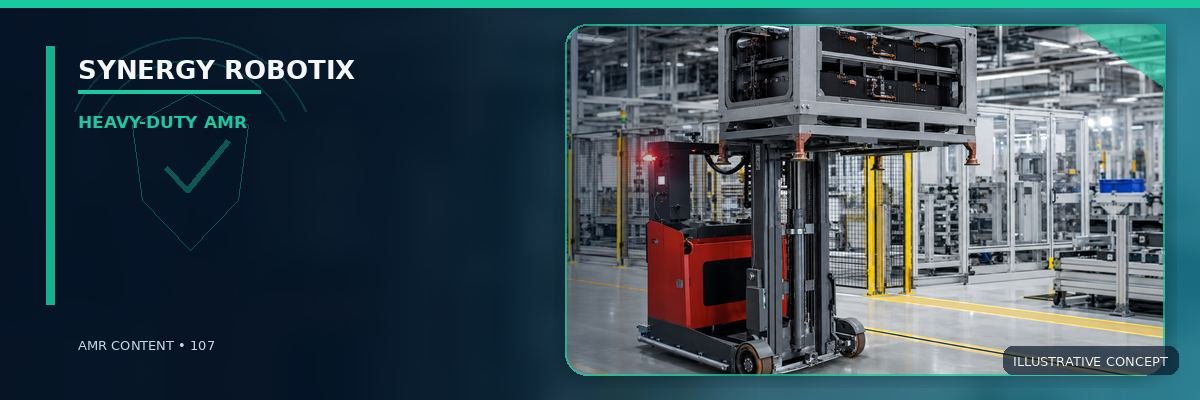
Design the operating concept for Heavy-Duty AMR Safety and Risk Assessment
Operations teams evaluating Heavy-Duty AMR Safety and Risk Assessment should connect commercial goals with site evidence. Demand, carrier condition, route geometry, control ownership, safety measures and acceptance criteria all influence the configuration and deployment plan.
Operating concept
Describe normal production, degraded operation, maintenance, manual movement and recovery for Heavy-Duty AMR Safety and Risk Assessment before selecting protective measures.
Interaction map
Identify people, manual vehicles, blind corners, doors, crossings, workstations, transfer zones and tasks that change visibility or stopping conditions.
Verification evidence
Trace each safety and operational requirement to an implemented control, a responsible owner and a representative test result.
Engineering inputs that shape Heavy-Duty AMR Safety and Risk Assessment
Define the operating modes for Heavy-Duty AMR Safety and Risk Assessment: normal automatic work, supervised operation, maintenance, manual movement, emergency response and recovery. The hazard review should consider the complete task, not only travel, because pickup, lifting, transfer and restart can create different interactions.
Map people, manual vehicles, fixed equipment, doors, crossings, blind corners, workstations and restricted zones. Protective sensing may be one measure among layout, separation, speed control, visibility, access management, training, procedures and emergency arrangements. Competent project stakeholders must determine the installed solution.
Evidence to prepare before equipment selection
- Operating modes and authorised roles
- Hazard and interaction map
- Protective functions and site controls
- Maintenance, cleaning and recovery procedures
- Training and emergency arrangements
- Traceable verification and acceptance records
Move from hazard review to controlled operation
For Heavy-Duty AMR Safety and Risk Assessment, the operating sequence should make task ownership, physical handling, system states and recovery visible from release through completion.
-
Describe the work
Document normal tasks, abnormal conditions, maintenance, manual movement and recovery in the intended operating area.
-
Identify interactions and hazards
Review people, vehicles, loads, machinery, routes, transfer zones, energy sources and foreseeable misuse.
-
Choose layered controls
Combine suitable protective functions, speed and route rules, layout, access, visibility, procedures, training and emergency arrangements.
-
Implement and verify
Trace requirements into configuration, installation and representative tests, including faults and controlled restart.
-
Operate and review
Monitor incidents, near misses, route changes, software changes, maintenance and workforce feedback after handover.
Connect Heavy-Duty AMR Safety and Risk Assessment to equipment and information flow
Interfaces around Heavy-Duty AMR Safety and Risk Assessment should be stateful, testable and owned. A clear handshake is easier to operate and support than a collection of one-way commands.
Task and fleet layer
Connect Heavy-Duty AMR Safety and Risk Assessment to task creation, assignment, priority, route management, energy rules and vehicle status.
Warehouse or production systems
Exchange load identity, source, destination, readiness and completion with WMS, WCS, ERP or MES tasks, scanners, conveyors, doors, lifts, call stations, production controls and charging points.
Fixed equipment
Coordinate conveyors, doors, lifts, machines, scanners and call stations through explicit, testable states.
Operator and support tools
Provide clear alarms, manual actions, event logs, permissions, change control and controlled remote-support access.
Design safe operation and practical recovery for Heavy-Duty AMR Safety and Risk Assessment
Safety for Heavy-Duty AMR Safety and Risk Assessment should be designed around the complete operating environment. Consider people, manual vehicles, blind corners, crossings, doors, transfer zones, unstable or damaged loads, maintenance access and foreseeable recovery actions.
Vehicle sensing is only one layer. Speed and route rules, layout, separation, visibility, workstation design, access management, training, procedures and emergency arrangements may also be required. Competent project stakeholders must select and validate the measures for the installed application.
Subjects to include in the installed review
- Operating modes and authorised users
- Shared-space traffic and crossings
- Load and transfer-point hazards
- Protective functions and site controls
- Maintenance and manual recovery
- Emergency stop and controlled restart
Evidence to review before approving Heavy-Duty AMR Safety and Risk Assessment
For Heavy-Duty AMR Safety and Risk Assessment, convert assumptions into records that can be reviewed, tested and maintained through the project lifecycle.
| Decision area | Evidence to prepare | How to validate it |
|---|---|---|
| Workflow | Origins, destinations, demand, queues, priority and fallback | Run normal and peak mission patterns |
| Load or payload | Load dimensions, mass, centre of gravity, carrier condition, orientation and transfer method | Use representative carriers and worst credible conditions |
| Route and environment | Manufacturing and industrial facilities, including constraints and shared traffic | Test the least-forgiving sections |
| Interfaces | Wms, wcs, erp or mes tasks, scanners, conveyors, doors, lifts, call stations, production controls and charging points | Challenge acknowledgement, timeout and recovery |
| Operations | Charging, maintenance, training, support and change control | Rehearse intervention and controlled restart |
Measure the operating outcome for Heavy-Duty AMR Safety and Risk Assessment
For Heavy-Duty AMR Safety and Risk Assessment, useful performance measures connect mobile activity with the workflow result and the effort needed to sustain it.
Flow reliability
Track whether Heavy-Duty AMR Safety and Risk Assessment completes the intended missions with stable handoffs, visible queues and controlled exception handling.
Operational effort
For Heavy-Duty AMR Safety and Risk Assessment, measure walking, driving, waiting, manual intervention, supervision and recovery work before and after implementation.
System availability
Review completed tasks, downtime causes, charger or resource queues, maintenance and return-to-service time for Heavy-Duty AMR Safety and Risk Assessment.
A staged route from concept to acceptance for Heavy-Duty AMR Safety and Risk Assessment
A controlled Heavy-Duty AMR Safety and Risk Assessment project should move through decision gates rather than treating installation as one event. Each stage should confirm that assumptions about the task, load or payload, site, interfaces, safety responsibilities and operating model still match the evidence.
Acceptance should use representative loads, routes, traffic and interfaces. Include blocked paths, unavailable destinations, failed handshakes, low energy, emergency stops, manual recovery and controlled restart, then hand over clear roles and maintenance routines.
-
Discover
Map the workflow or mission, stakeholders, current constraints and measurable outcome.
-
Survey
Capture representative loads or payloads, route or terrain, transfer points, services, traffic and hazards.
-
Engineer
Select the architecture, define interfaces, controls, safety measures, energy and support responsibilities.
-
Implement
Configure, integrate and test components with controlled change and traceable issue resolution.
-
Accept
Run representative normal, peak, fault and recovery tests before training and operational handover.
Related robots, applications and guides
Use these Synergy Robotix resources to compare adjacent product, application, integration and selection decisions connected with Heavy-Duty AMR Safety and Risk Assessment.
FAQ
Questions buyers ask
Straight answers about Heavy-Duty AMR Safety and Risk Assessment.
Still have a question? Our engineers answer every enquiry personally.
Who should participate in planning Heavy-Duty AMR Safety and Risk Assessment?
Operations, engineering, safety, controls or IT, maintenance, equipment providers and the people responsible for emergency response and recovery should contribute.
Are vehicle sensors enough to make an application safe?
No. Protective sensing may be combined with speed and route rules, layout, separation, visibility, access, training, procedures and emergency arrangements according to the installed risk assessment.
Which operating modes need review?
Review normal automatic work, supervised operation, maintenance, cleaning, manual movement, blocked routes, emergency response, fault recovery and restart.
How should changes be controlled?
Reassess route, load, carrier, speed, software, traffic, layout and operating-role changes before release. Record approval, testing and training where required.
What evidence should be retained?
Keep the operating concept, hazard assessment, requirements, configuration, test results, training records, maintenance instructions and approved recovery procedures.
Let us engineer the right fit
Plan Heavy-Duty AMR Safety and Risk Assessment around the real operation
Share the load or payload, route or operating domain, task demand, transfer points, interfaces and known constraints for Heavy-Duty AMR Safety and Risk Assessment. Send them to us and a Synergy Robotix engineer will come back with the questions that matter and a practical next step.